
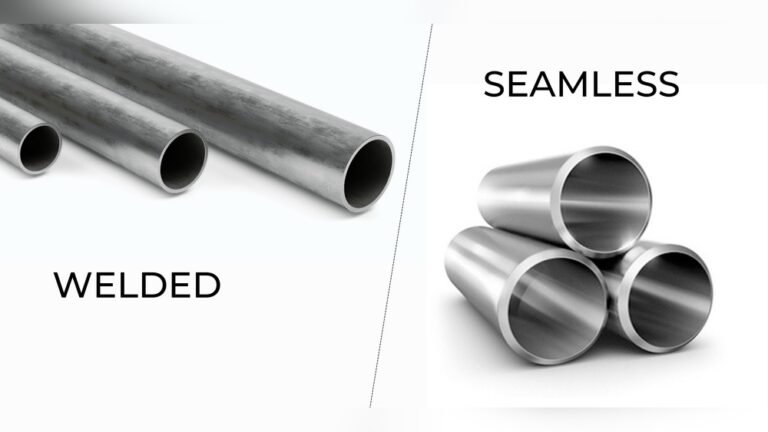
Pipes are important in many industries. We use them to carry water, gas, oil, and other things. Two main types of pipes are seamless pipes and welded pipes. People often ask, “Which one is better?” This article explains the difference between seamless and welded pipes. It helps you understand their uses, benefits, and limits.
What Are Seamless Pipes?
Seamless pipes are made without any joints or seams. They come from a solid metal piece. The metal is heated and stretched into a hollow tube. This process makes the pipe strong and smooth inside and outside.
Because there are no seams, these pipes are less likely to break or leak. Seamless pipes are often used where strength and safety are very important.
How Are Seamless Pipes Made?
- Start with a solid metal billet.
- Heat the billet to a high temperature.
- Use special machines to push or pull the billet into a hollow tube.
- Cool the tube and cut it to size.
This process needs special equipment and takes more time than making welded pipes.
What Are Welded Pipes?
Welded pipes are made by joining flat metal sheets or strips. The edges are heated and pressed together to form a pipe. This creates a seam along the pipe length.
Welded pipes are common and often less expensive than seamless pipes. They are easier and faster to make. But the weld seam can be a weak point if not done well.
How Are Welded Pipes Made?
- Start with a metal sheet or strip.
- Shape the metal into a round tube.
- Use heat or pressure to join the edges.
- Finish the pipe by cutting and testing.
Key Differences Between Seamless and Welded Pipes
| Feature | Seamless Pipe | Welded Pipe |
|---|---|---|
| Manufacturing | Made from solid metal without seams | Made by joining metal sheets or strips |
| Strength | Higher strength, no seam to weaken | Lower strength due to weld seam |
| Cost | More expensive to produce | Generally cheaper |
| Size Range | Limited size options | Available in wide sizes |
| Surface Finish | Uniform inside and outside | Weld seam may cause unevenness |
| Pressure Capacity | Can handle higher pressure | Lower pressure capacity |
| Common Uses | Oil, gas, chemical, power plants | Water pipes, construction, low pressure |
Advantages of Seamless Pipes
- Strength: No weld seam means better strength.
- Pressure Resistance: Good for high pressure.
- Corrosion Resistance: Less chance of leaks.
- Surface Quality: Smooth inside, less friction.
- Reliability: Used where safety is critical.
Advantages of Welded Pipes
- Cost: Cheaper to make and buy.
- Size Variety: Available in many sizes and lengths.
- Manufacturing Speed: Faster production time.
- Customization: Easier to make special sizes.

Credit: www.priminox.com
Disadvantages of Seamless Pipes
- Cost: Expensive to produce.
- Size Limits: Not available in very large sizes.
- Manufacturing Complexity: Requires special machines.
- Surface Defects: Sometimes small scratches or cracks occur.

Credit: savree.com
Disadvantages of Welded Pipes
- Weaker Seam: Weld seam can be weak.
- Pressure Limits: Not for very high pressure.
- Corrosion Risk: Weld seam may corrode faster.
- Surface Finish: Can be rough near the seam.
Which Pipe Should You Choose?
Choosing between seamless and welded pipes depends on your needs.
- If you need strong pipes for high pressure, choose seamless.
- If cost is a concern and pressure is low, choose welded.
- For very large sizes, welded pipes are easier to get.
- When the inside surface needs to be smooth, seamless is better.
For example, oil and gas companies prefer seamless pipes. They need pipes that handle high pressure and do not leak. But water supply companies often use welded pipes. Their pipes work under low pressure and cost matters.
Common Problems in Seamless Pipes
Seamless pipes are not perfect. They can have problems too.
- Surface scratches: Can happen during making or handling.
- Dimensional inaccuracy: Size may vary slightly.
- Internal stress: Can cause cracks over time.
- Ovality: Pipe shape may not be perfectly round.
- Corrosion: Even seamless pipes can corrode in tough places.
Lifespan of Seamless and Welded Pipes
The lifespan depends on many things. Material quality, environment, and use affect pipe life.
- Seamless pipes usually last longer under pressure.
- Welded pipes can last well if used properly.
- Corrosion and damage reduce pipe life.
- Regular checks and maintenance help extend lifespan.
Summary
Both seamless and welded pipes have good uses. Seamless pipes are strong, smooth, and good for high pressure. But they cost more and come in fewer sizes.
Welded pipes are cheaper and come in many sizes. They work well for low pressure and general use. But the weld seam may weaken the pipe.
Think about your needs before choosing. Safety, cost, size, and pressure are key points. This helps you pick the right pipe for your job.
Frequently Asked Questions
Which Is Better, Seamless Or Welded Pipe?
Seamless pipes offer higher strength, pressure capacity, and corrosion resistance for demanding applications. Welded pipes cost less and suit general use. Choose seamless for durability and welded for budget-friendly projects.
Which Is Cheaper, Seamless Or Welded Pipe?
Welded pipes are generally cheaper than seamless pipes due to simpler manufacturing and less material waste. Seamless pipes cost more.
What Are The Common Problems With Seamless Pipe?
Common problems with seamless pipes include surface scratches, dimensional inaccuracies, internal stress, cracking, ovality, wall thickness variation, and corrosion in harsh environments. These issues can affect performance, especially under high pressure or corrosive conditions. Proper inspection and maintenance help minimize these defects.
What Is The Lifespan Of A Seamless Pipe?
The lifespan of a seamless pipe typically ranges from 20 to 50 years. Proper maintenance and operating conditions extend its durability. Seamless pipes resist corrosion and high pressure, enhancing their longevity in oil, gas, and chemical industries. Regular inspections help prevent early failures and maximize service life.