
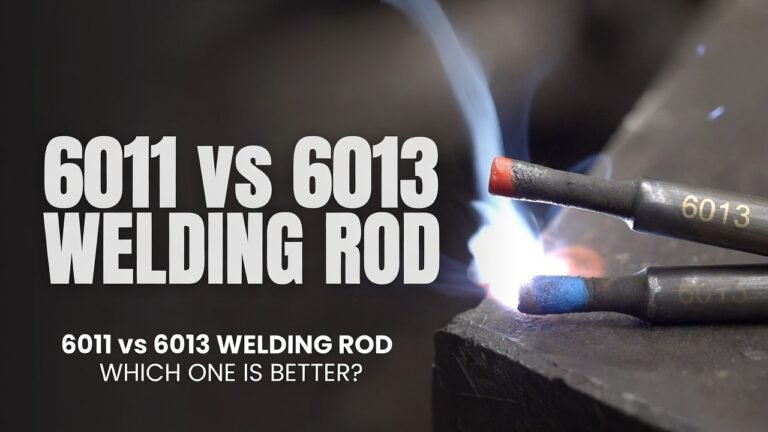
Choosing the right welding rod is important for a good weld. Two common rods are 6011 and 6013. Both are used for welding mild steel. But they have different uses and features. This guide will help you understand 6011 vs 6013 welding rod in simple words.
What Is a Welding Rod?
A welding rod is a stick used to join metal pieces. It melts and fuses the metal together. Welding rods have different types based on the metal and job. The 6011 and 6013 rods are popular for stick welding. They work well with mild steel.
Basic Differences Between 6011 and 6013
Here is a quick table to compare the two rods:
| Feature | 6011 Welding Rod | 6013 Welding Rod |
|---|---|---|
| Primary Use | Repairs, dirty or rusty metal, deep penetration | Sheet metal, clean metal, general fabrication |
| Penetration | Deep and strong | Shallow and smooth |
| Bead Appearance | Flatter and stronger | Smoother and prettier |
| Slag Control | Less slag, easier to clean | More slag, needs careful control |
| Best For | Maintenance, thick metal, farm equipment | New builds, thin metal, hobby work |
| Power Source | AC or DC (usually DC+) | AC or DC (often AC buzz boxes) |
What Is 6011 Welding Rod?
The 6011 rod is strong and deep penetrating. It can weld dirty, rusty, or painted metal. This is because it has cellulosic flux. This flux allows the arc to cut through rust and dirt. That makes 6011 perfect for repairs and farm work.
It works on both AC and DC power sources. Most welders use DC+ for better results. You can weld in all positions with 6011. That means flat, vertical, overhead, and horizontal.
Key Features Of 6011 Rod:
- Deep penetration for strong bonds
- Works well on dirty or rusty metal
- Good for thick metal and repairs
- Can weld in all positions
- Less slag, easier to clean
When To Use 6011 Welding Rod?
Use 6011 when you need a strong weld on dirty metal. It is good for farm equipment, trailers, and steel frames. It works well if the metal is thick or has rust. It’s also good for quick repairs.
What Is 6013 Welding Rod?
The 6013 rod is easy to use and makes smooth welds. It has a softer arc than 6011. This makes it easier for beginners. The flux in 6013 is different. It creates less smoke and smoother slag. But it has less penetration than 6011.
6013 works well on clean, thin metal. It is good for sheet metal and new construction. You can use AC or DC power with 6013. Many use it on AC buzz boxes.
Key Features Of 6013 Rod:
- Smoother and cleaner weld bead
- Easy arc start for beginners
- Works best on clean metal
- Good for thin metal and sheet metal
- More slag, needs careful cleaning
When To Use 6013 Welding Rod?
Choose 6013 for new metal builds and thin sheets. It is good for hobby projects and fabrications. Use it when the metal is clean and fits well. It creates nice welds that look good.
Detailed Comparison of 6011 Vs 6013 Welding Rod
To understand better, let’s compare the rods on different points.
1. Penetration
6011 offers deep penetration. It melts the metal deeply. This makes the weld strong. It can weld through rust and dirt.
6013 has shallow penetration. It stays near the surface. This is good for thin metal. But it is not for dirty or thick metal.
2. Welding Positions
6011 can weld in all positions. Flat, vertical, overhead, or horizontal.
6013 is also all-position. But best on flat or horizontal. It is easier to control on these positions.
3. Slag And Cleaning
6011 produces less slag. Slag is the leftover coating after welding. Less slag means easier cleaning.
6013 creates more slag. It needs more careful cleaning. If you don’t clean well, the weld can be weak.
4. Weld Appearance
6011 welds are strong but rough looking.
6013 welds are smoother and nicer to look at. This is good for visible welds.
5. Power Source
Both rods can run on AC or DC power. 6011 usually prefers DC+ for better arc. 6013 often works well on AC buzz boxes.
6. Metal Condition
6011 works great on dirty, rusty, or painted metal.
6013 needs clean, smooth metal for best results.
7. Skill Level
6011 is harder to use. It needs skill to control the arc.
6013 is easier for beginners. It has a smooth arc and easy start.
Summary: Which Rod Should You Choose?
Here is a simple guide to help you decide:
- Use 6011: For repairs, dirty metal, thick steel, and farm equipment.
- Use 6013: For clean metal, thin sheets, hobby projects, and new builds.
Both rods are useful and important. Knowing their differences helps you weld better. Always pick the rod that suits your metal and job.
Tips for Welding with 6011 and 6013 Rods
Tips For 6011
- Keep a short arc length for deep penetration.
- Use “whip and pause” motion to control puddle.
- Wear good protection; arc is strong and bright.
- Clean slag after welding for better finish.
Tips For 6013
- Keep a steady arc length to avoid slag issues.
- Use smooth, steady motion for clean bead.
- Good fit-up helps produce better welds.
- Remove slag carefully to avoid weak spots.
Frequently Asked Questions
Is 6011 Better Than 6013?
6011 offers deeper penetration and works well on dirty or rusty metal. 6013 provides a smoother, cleaner weld, ideal for thin, clean metal and beginners. Choose 6011 for repairs and thick materials; pick 6013 for fabrication and new builds. Neither is universally better.
What Is A 6011 Welding Rod Used For?
A 6011 welding rod is used for deep penetration on dirty, rusty, or painted metal. It suits maintenance, repairs, and thick materials. Ideal for farm equipment, truck frames, and all-position welding. It handles poor fit-up and works on AC or DC power sources effectively.
What Are 6013 Rods Used For?
6013 rods weld mild steel with smooth, clean beads and shallow penetration. They suit sheet metal, new construction, and hobby projects. These rods work well on clean metal and fill gaps, ideal for beginners and fabricators seeking neat welds on thin materials.
What Is The Difference Between 6011 And 6013 And 7018?
6011 offers deep penetration, ideal for dirty, rusty metal and repairs. 6013 provides smooth, shallow penetration, best for clean, thin sheet metal. 7018 delivers strong, low-hydrogen welds for structural applications and high strength. Each rod suits different metal conditions and welding needs.
Conclusion
6011 and 6013 welding rods each have their place. 6011 is best for tough, dirty jobs needing deep welds. 6013 is better for clean, thin metals and beginners.
Choosing the right rod means better welds and safer work. Always check the metal condition and job needs before welding. Practice with both rods to know their feel.
With this guide, you can understand the key points of 6011 vs 6013 welding rods. Use the right rod for your project. Happy welding!